THREE SUMMER RESIDENCES IN KRYA VRYSI
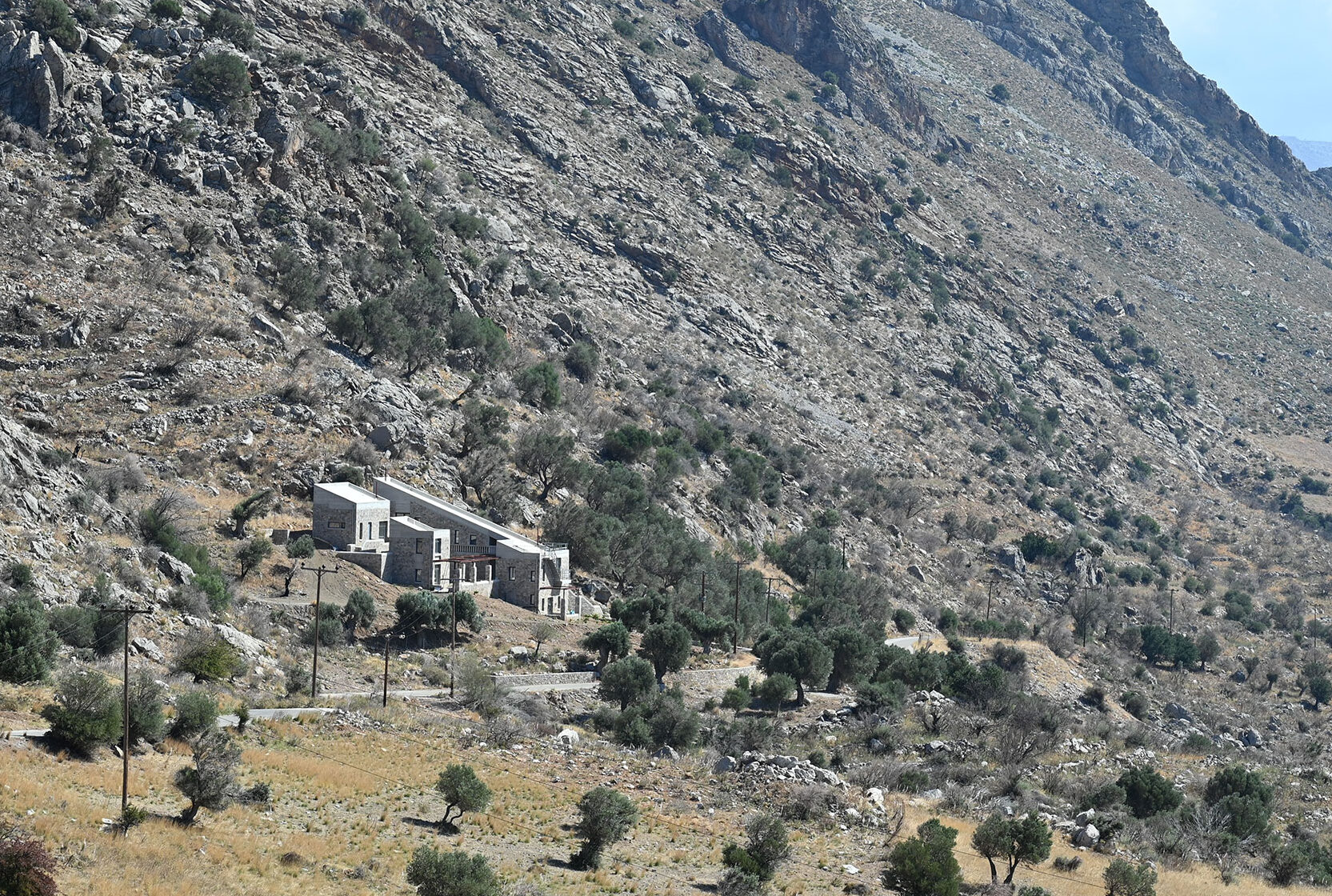
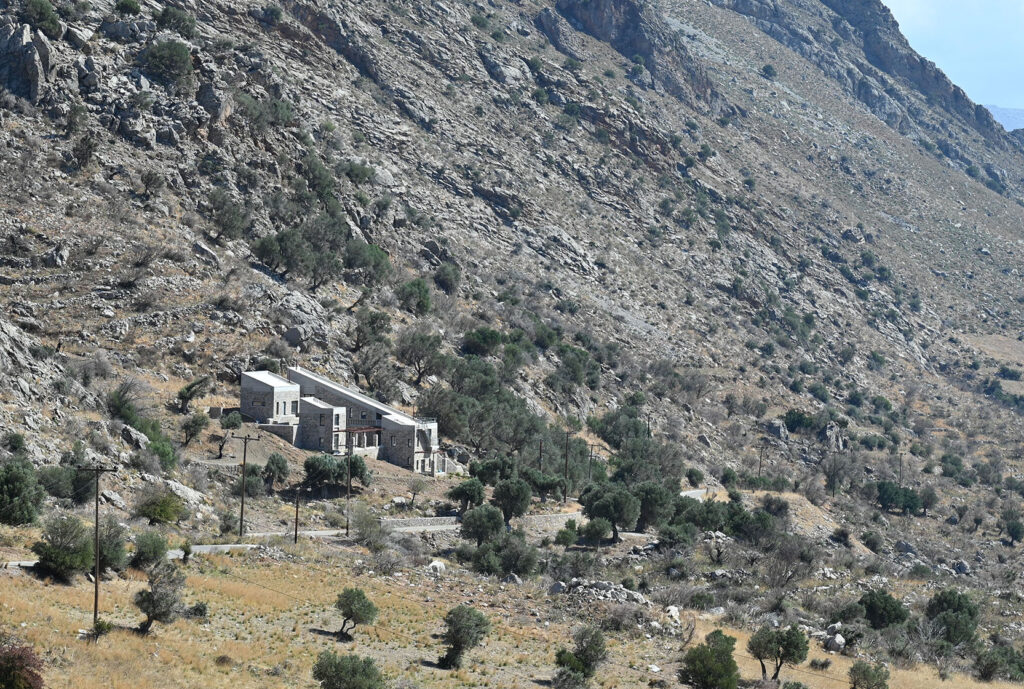
The project comprises three two-storey stone residences located near the settlement of Krya Vrysi, at an altitude of approximately 500 meters. The site lies within an agricultural landscape at the foothills of Mount Kedros, where olive groves and livestock farming define the character of the area. The climate is dry, with strong prevailing northern winds shaping both the natural environment and the architectural response.
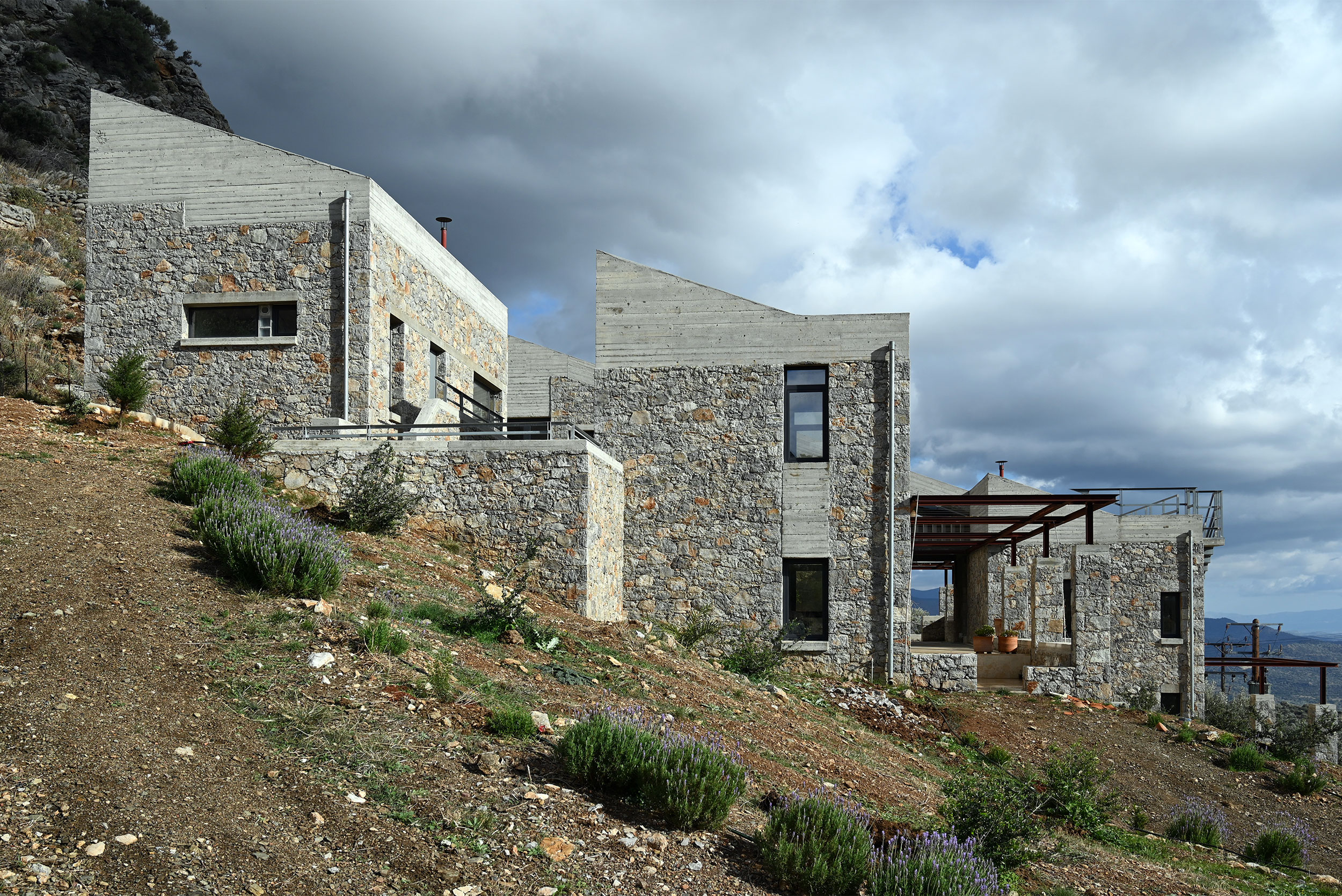
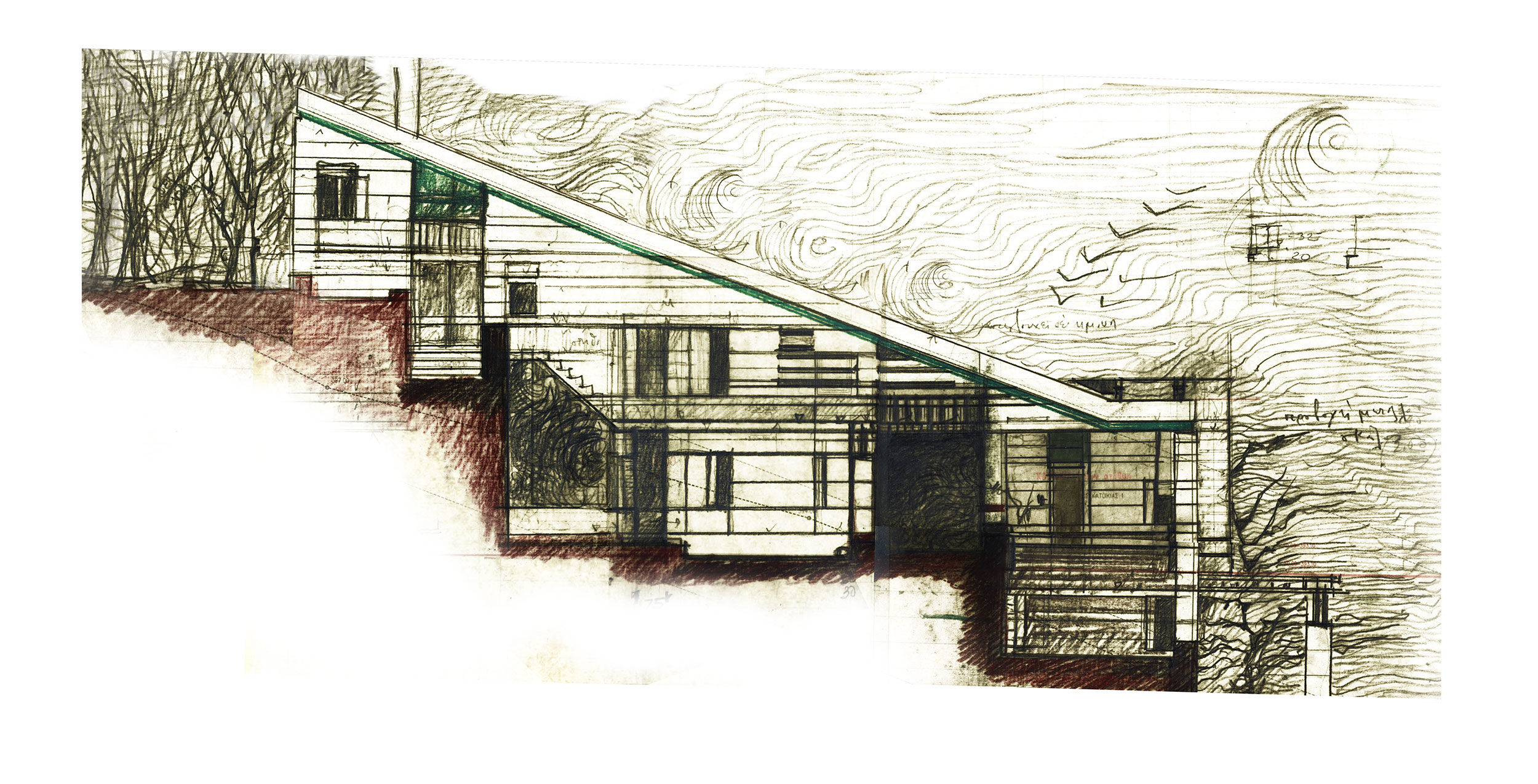
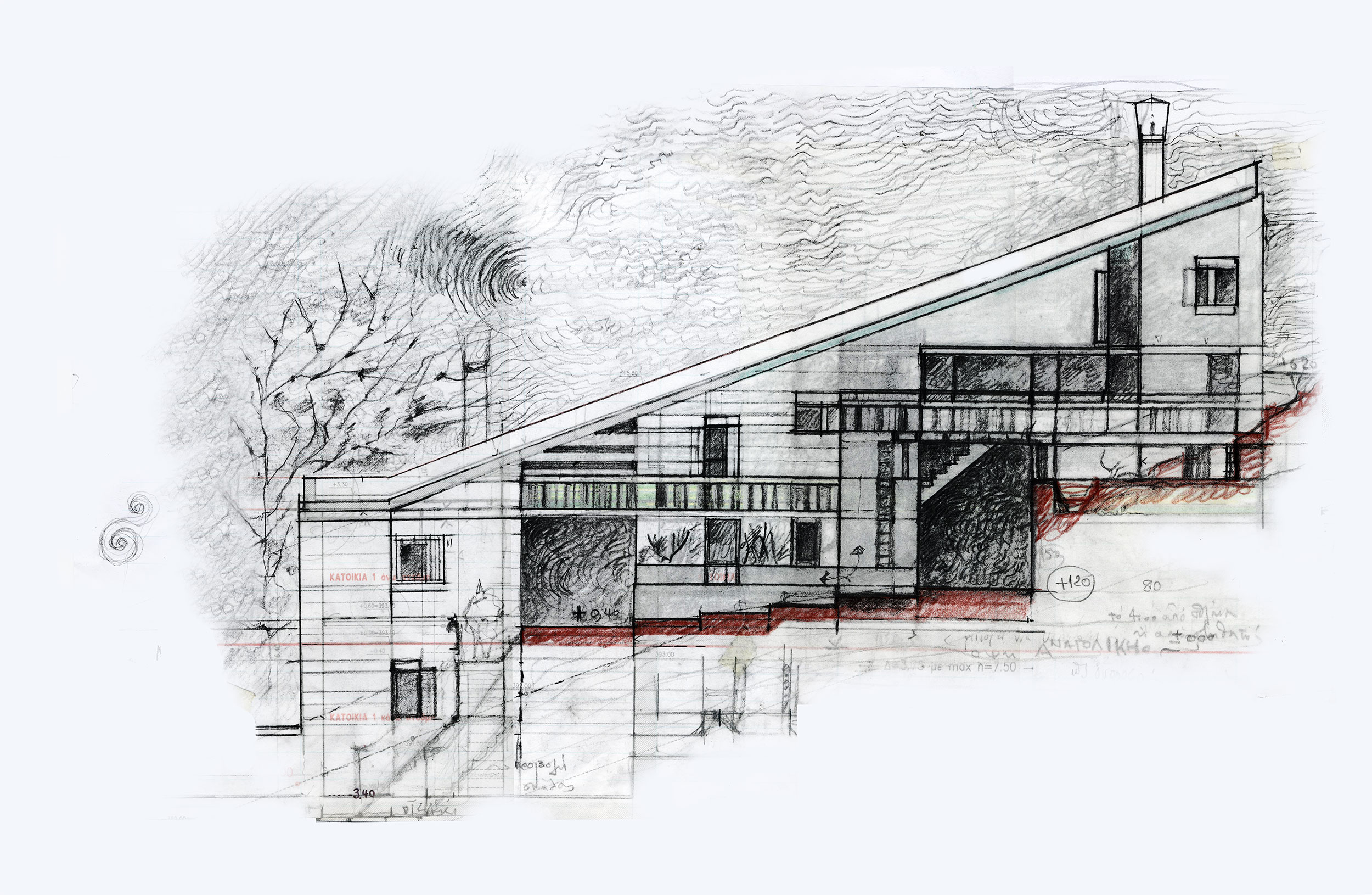
The sloping plot, inclined by roughly 20 degrees toward the south, informed the positioning of the buildings. The houses are embedded in the natural topography, following the terrain and carefully preserving the existing olive trees. Their unified south-facing roofs are utilized for the installation of photovoltaic panels, contributing to the buildings’ energy demands and reinforcing a passive approach to sustainability.
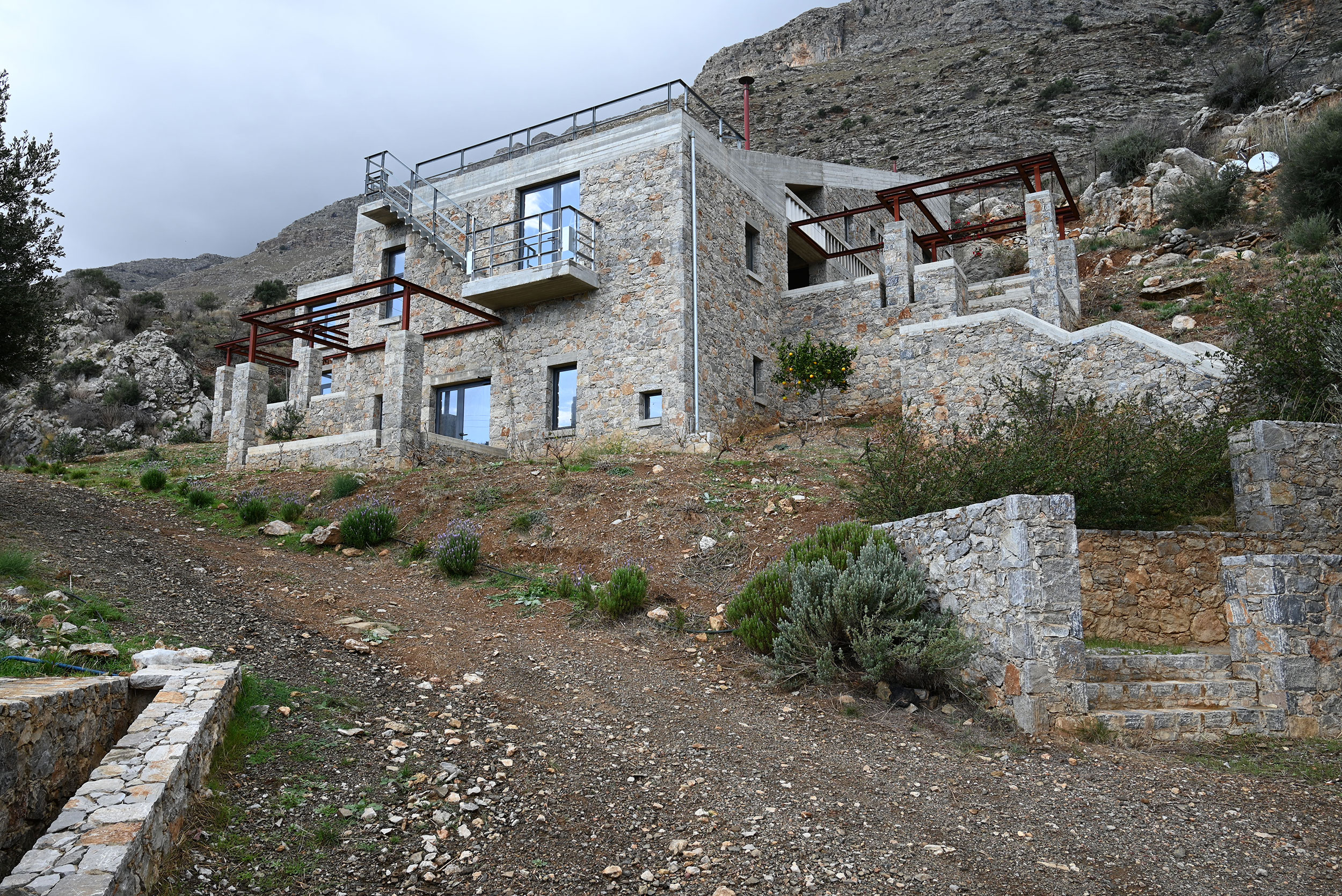
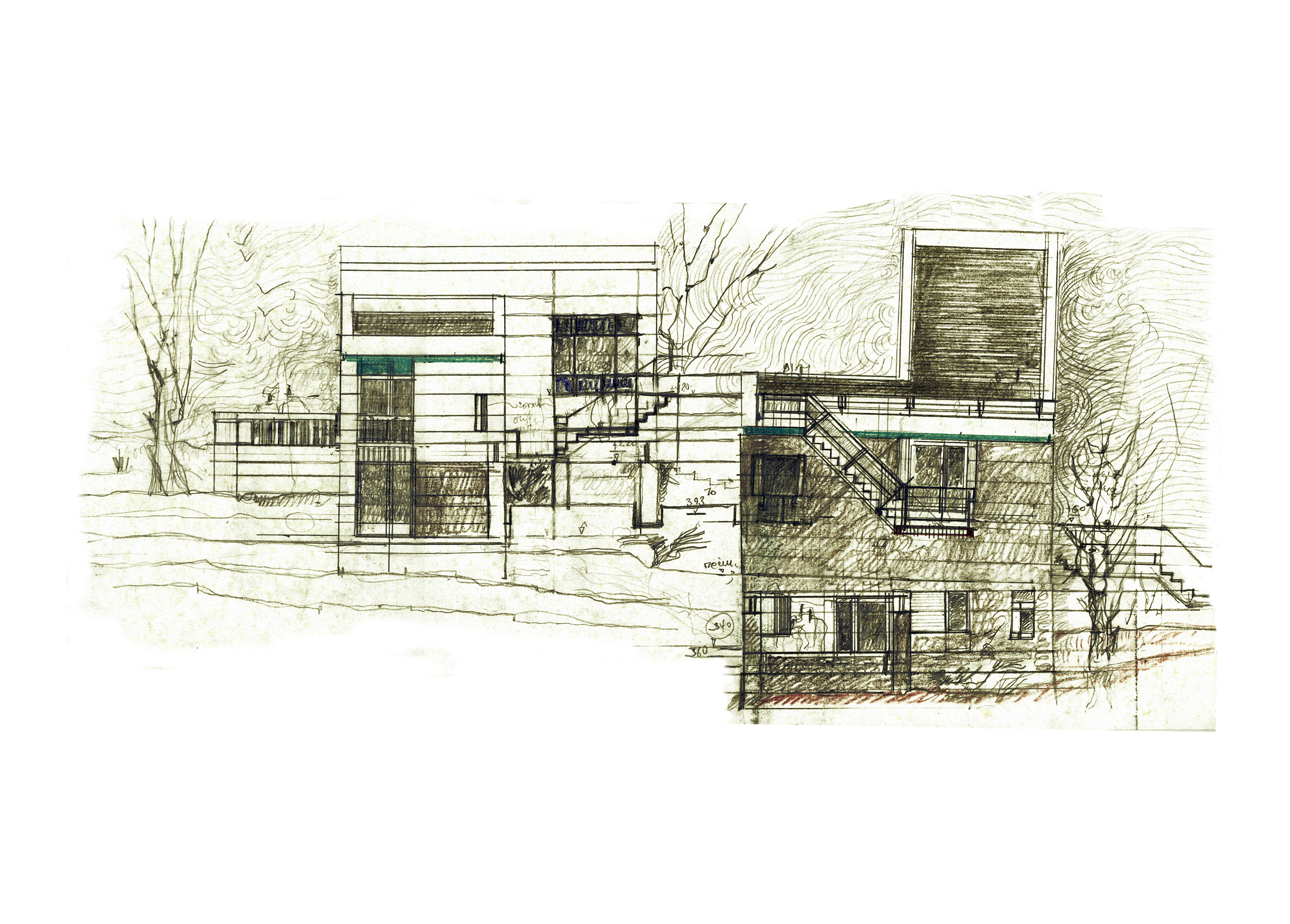
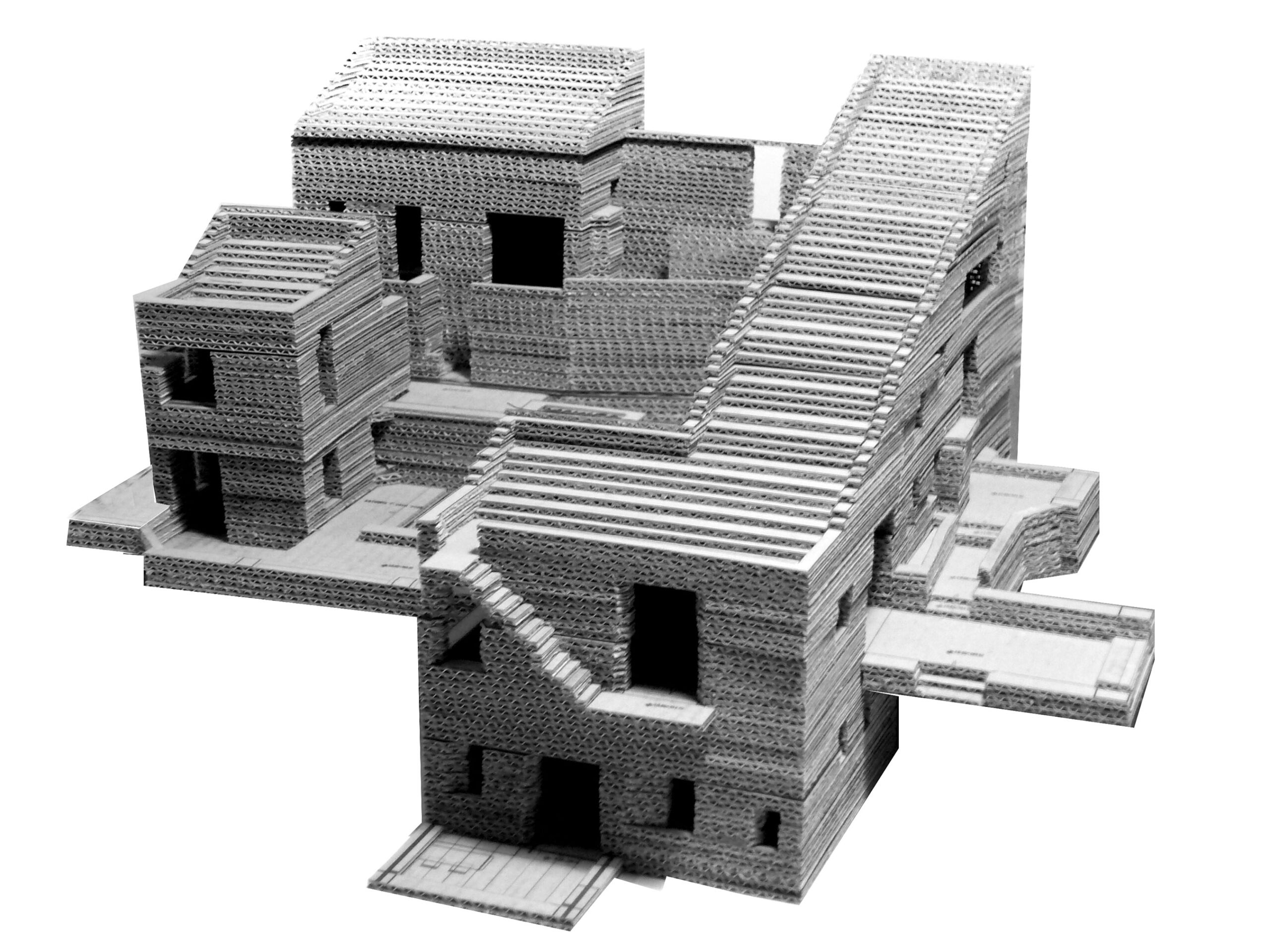
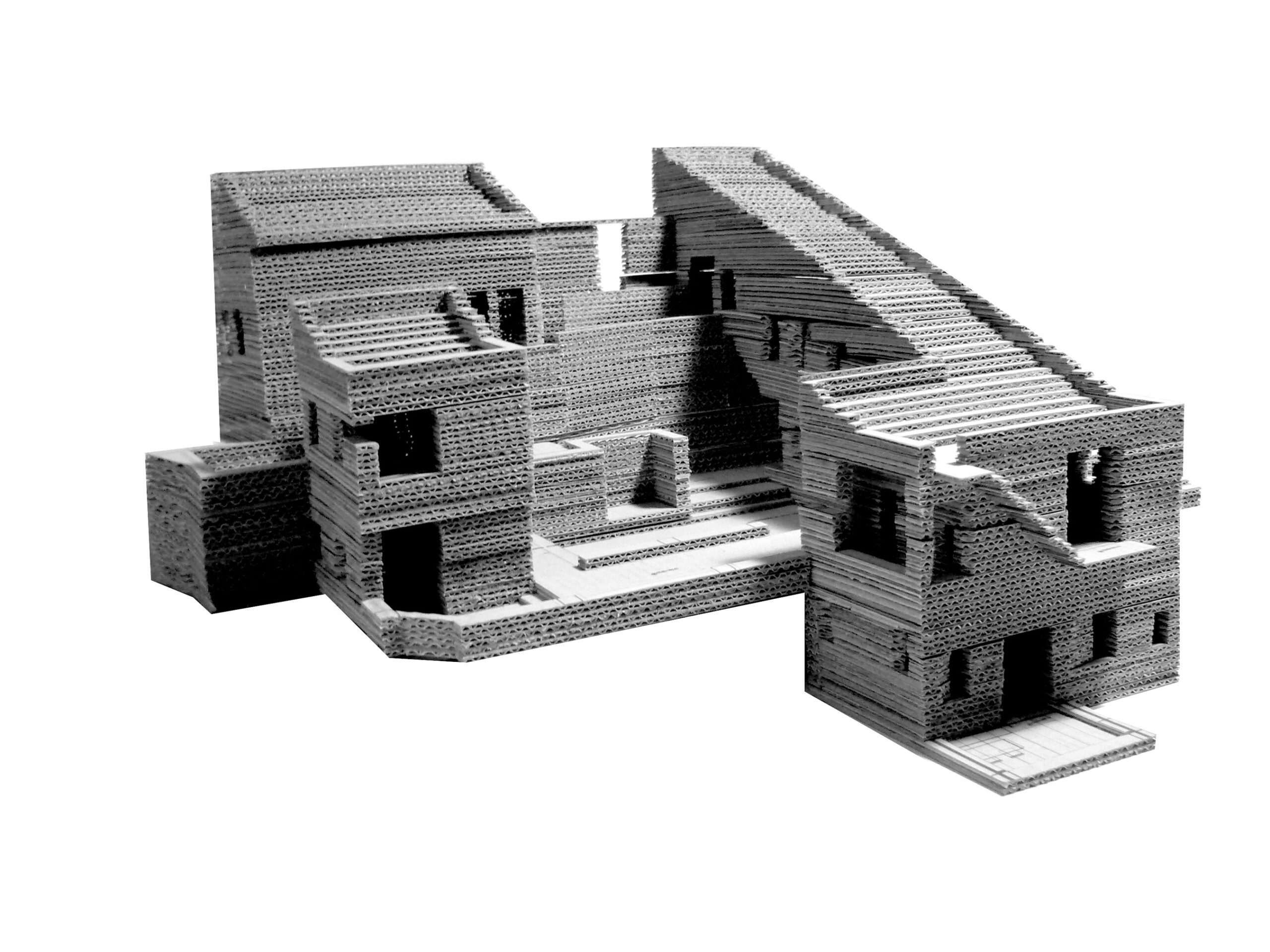
The three volumes are arranged to form a protected inner courtyard, sheltered from the northern winds. This shared open space acts as a climatic buffer and a social nucleus for the ensemble. The residences maintain a direct relationship with the surrounding landscape, achieved without extensive excavation or artificial terracing. Internal staircases connect the different levels, allowing the buildings to adapt naturally to the slope.
The initial design concept was based on three variations of a single, Γ-shaped residential type, organized around a central communal square. The typology was composed of three square modules measuring 4.60 × 4.60 meters, linked by a private semi-outdoor space of 2.50 × 4.00 meters. This semi-outdoor zone extended into a private courtyard, opening radially outward from the perimeter of the complex.
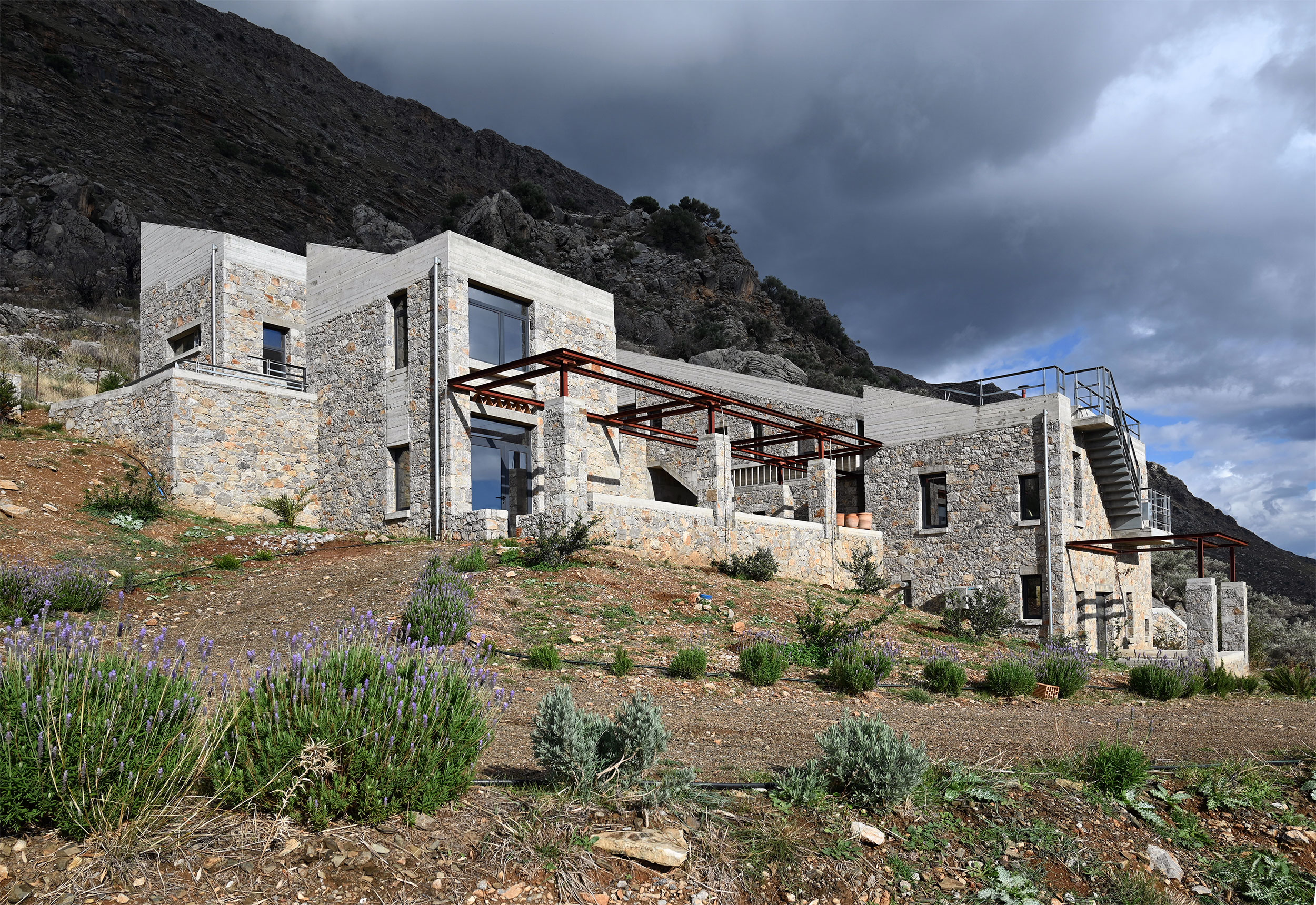
Planning constraints and regulatory requirements led to a refined final scheme, maintaining the core principles of the original composition while reducing the overall footprint. Covered semi-outdoor spaces were replaced by pergolas, allowing for a lighter architectural expression and a closer dialogue with the landscape.
Material choices reinforce the project’s connection to its setting. Load-bearing stone walls are constructed from locally sourced limestone found in abundance on site. Exposed reinforced concrete is used selectively, while floors are finished with local slate slabs or polished cement screed. Openings are defined by aluminum window frames and steel doors, balancing durability with simplicity.
The project seeks to merge architectural clarity, environmental responsiveness, and material authenticity, resulting in a small-scale residential ensemble firmly rooted in its place.
Project completed: 2025